Easy Chickpea Spinach Rice
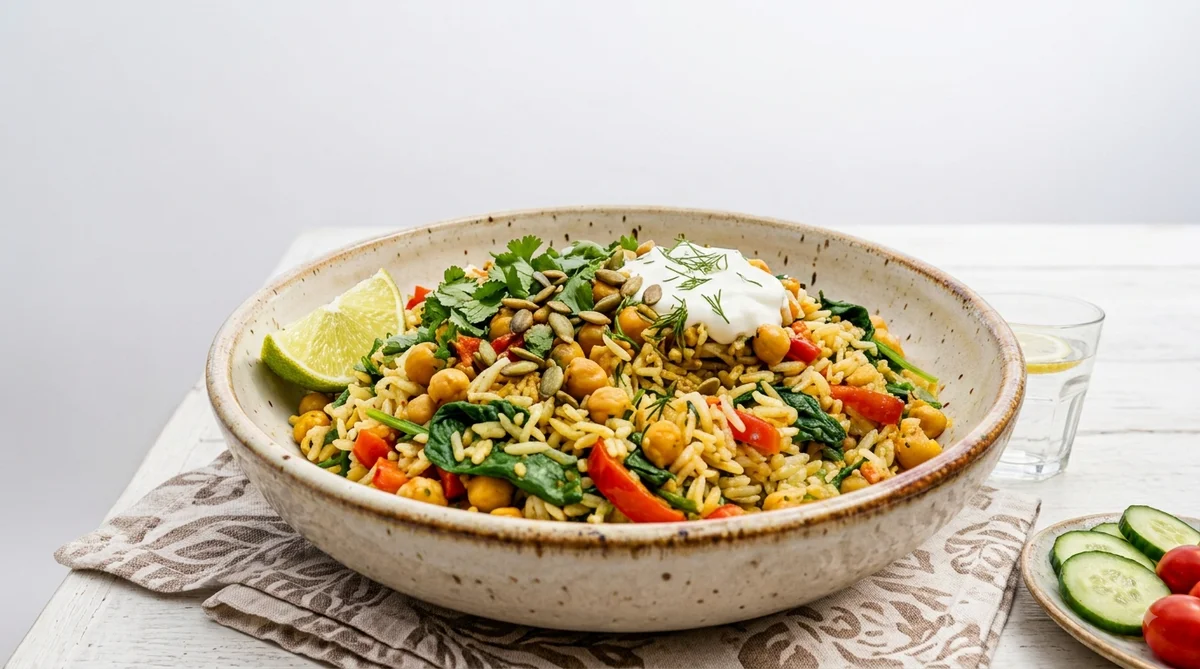
Chickpea spinach rice is a quick one-pot vegetarian dinner made with canned chickpeas, fresh spinach, and rice simmered together with garlic and warm spices. It takes about 30 minutes from start to finish and is ideal for busy weeknights, meal prep, or anyone who wants a filling, plant-based meal with minimal cleanup.
Why This Recipe Works
Why You'll Love This Chickpea Spinach Rice
The thing that took this recipe from good to great was toasting the rice in the spiced oil for a minute before adding any liquid — it keeps the grains from turning gluey and gives the whole pot a deeper flavor than just dumping everything in at once. Because the chickpeas go in raw-to-the-pot (already cooked from the can), they simmer right along with the rice and pick up all the same garlic and cumin flavor instead of tasting like an afterthought stirred in at the end.
It's genuinely a one-pot meal — one pan, one lid, minimal cleanup — and it's ready in about 30 minutes, which makes it realistic for a weeknight. Folding in the spinach at the very end, off the heat, is what keeps it bright green and tender instead of wilting into mush, and a squeeze of lemon at the finish keeps the whole dish from tasting flat.
Ingredients
- 2 tbsp olive oil
- 1 small yellow onion, diced
- 3 garlic cloves, minced
- 1 tsp ground cumin
- 1/2 tsp smoked paprika
- 1 cup long-grain white rice, rinsed
- 2 cups vegetable broth
- 1 (15 oz) can chickpeas, drained and rinsed
- 5 oz baby spinach (or frozen, thawed and squeezed dry)
- 1/2 lemon, juiced
- Salt and pepper, to taste
- Fresh parsley or dill, for serving (optional)
Instructions
- Heat the olive oil in a large pot or deep skillet with a lid over medium heat. Add the onion and cook, stirring occasionally, until softened, about 3-4 minutes.
- Add the garlic, cumin, and smoked paprika, and cook until fragrant, about 30 seconds.
- Add the rinsed rice and stir for about 1 minute to lightly toast it and coat it in the spiced oil.
- Pour in the vegetable broth and add the chickpeas. Stir once, then bring to a boil.
- Reduce the heat to low, cover with a tight-fitting lid, and simmer undisturbed for 15-18 minutes, until the rice is tender and the liquid is absorbed. Resist the urge to lift the lid while it cooks.
- Remove the pot from the heat and let it rest, still covered, for 5 minutes.
- Uncover and fluff the rice with a fork. Fold in the spinach a handful at a time — the residual heat will wilt it in about 1-2 minutes. If it needs more help, set the pot over low heat for another minute or two, stirring gently.
- Stir in the lemon juice, then season with salt and pepper to taste.
- Serve warm, topped with fresh parsley or dill if using.
Ingredient Substitutions
Rice: Long-grain white rice is what this recipe is tested with, but basmati rice works just as well — rinse it first for fluffier, more separate grains.
No fresh spinach? Use frozen spinach instead — thaw it fully and squeeze out as much liquid as you can before folding it in, so the rice doesn't turn watery.
No canned chickpeas? Use home-cooked chickpeas instead — about 1 1/2 cups cooked and drained is a good swap for one 15 oz can.
No vegetable broth? Use water instead, plus an extra pinch of salt — the broth adds flavor, but water keeps the dish just as simple.
Want more warmth? Add a pinch of ground coriander or a small cinnamon stick with the cumin and paprika for a more Mediterranean-leaning flavor.
No lemon? Use a small splash of red wine vinegar instead — it adds the same brightness the dish needs at the end.
Storage & Reheating
Let the rice cool completely, then store it in an airtight container in the refrigerator for up to 4 days. It's a good meal-prep dish and holds its texture well when stored this way.
Reheat on the stovetop over low heat with a small splash of broth or water, stirring gently until warmed through — this brings the rice back to its original texture. The microwave also works: cover loosely and reheat in short bursts, stirring in between and adding a splash of water if it looks dry.
Tips for Perfect Rice
Rice troubles almost always come down to one of two things: too much moisture management, or too little.
- Why is my chickpea rice mushy? Usually too much liquid, heat that's too high, or lifting the lid partway through, which lets steam escape unevenly. Stick to the 1:2 rice-to-broth ratio, keep the heat low once it's covered, and leave the lid on the whole time.
- Why is my rice still hard? This is almost always insufficient liquid or insufficient covered cooking time. If the liquid is gone but the rice still has bite, add a small splash more broth, re-cover, and give it a few more minutes on low.
- Always rest before fluffing. Pulling the pot off heat and letting it sit, covered, for 5 minutes lets the rice finish steaming gently and firms up the texture before you fluff it with a fork.
Can I Use Fresh or Frozen Spinach?
Either works. Fresh baby spinach wilts almost instantly from the residual heat of the just-cooked rice — no extra cooking needed. Frozen spinach works too, but thaw it completely and squeeze out as much water as possible first, or it will water down the finished dish.
Can I Use Canned Chickpeas?
Yes — canned chickpeas are the whole point of keeping this recipe quick. Just drain and rinse them, then add them in with the rice and broth at the start. Since they're already fully cooked, they only need to heat through during the simmer.
What to Serve With Chickpea Spinach Rice
- A dollop of plain yogurt or a drizzle of tahini on top
- Warm pita or flatbread on the side
- A simple cucumber and tomato salad
- Extra lemon wedges for squeezing at the table
Frequently Asked Questions
What is chickpea rice?
Chickpea rice is a simple one-pot dish where rice is simmered together with chickpeas, aromatics, and broth until tender. This version adds fresh spinach at the end, turning it into a filling, complete vegetarian dinner instead of a side dish.
Can I use canned chickpeas?
Yes, canned chickpeas are the easiest option — just drain and rinse them before adding. Since they're already fully cooked, they go in with the broth and rice and only need to warm through during the simmer, with no extra cooking time required.
Can I use fresh or frozen spinach?
Both work well. Fresh baby spinach wilts in about a minute or two off the heat. If using frozen, thaw it first and squeeze out as much liquid as possible before folding it in, so the finished rice doesn't turn watery.
What type of rice is best for chickpea spinach rice?
Long-grain white rice is the most reliable choice here since it cooks evenly in about 15-18 minutes with this liquid ratio. Basmati rice also works well and adds a slightly more fragrant result; just rinse it first to keep the grains separate.
How do I keep chickpea rice from getting mushy?
Stick to the 1:2 rice-to-liquid ratio, keep the heat low during the simmer, and leave the lid on the whole time — lifting it lets steam escape unevenly. Let the rice rest off heat for 5 minutes before fluffing, which also helps it firm up.
Why is my rice still hard after cooking?
This usually means not enough liquid, not enough covered simmering time, or heat that's too low to keep a gentle simmer going. If the rice is still firm once the liquid is absorbed, add a splash more broth, re-cover, and cook a few more minutes.
Can I make chickpea spinach rice ahead of time?
Yes, it holds up well for meal prep. Let it cool completely before refrigerating in an airtight container, then reheat with a splash of broth or water to loosen the rice back up, since it firms up as it sits.
Is chickpea spinach rice vegan?
It's vegetarian as written, and vegan as long as your vegetable broth doesn't contain any animal-derived ingredients — most store-bought vegetable broths are already vegan, but it's worth checking the label if that matters to you.