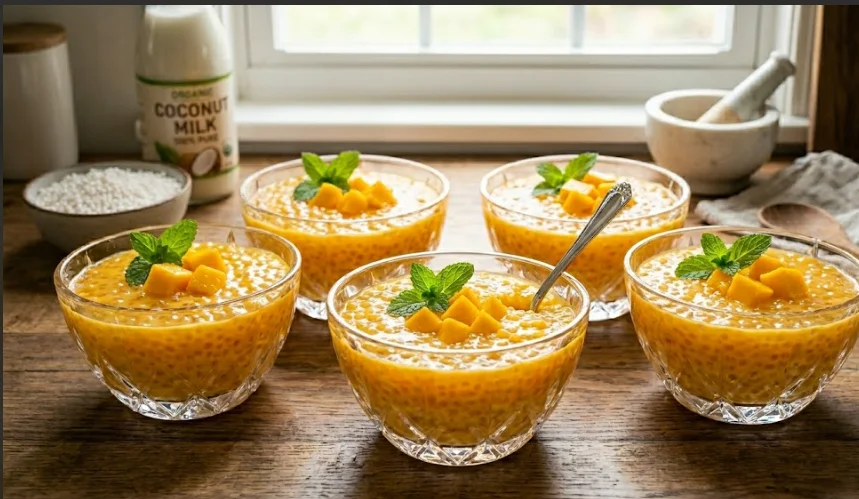
Mango Sago Dessert
Mango Sago Dessert is a creamy chilled dessert made with ripe mangoes, chewy sago pearls, and a rich coconut milk mixture. Popular across Hong Kong and Southeast Asia, it's an easy recipe that comes together in about 20 minutes of active prep and is ideal for warm weather, make-ahead entertaining, or a light summer treat.
Why This Recipe Works
I've found that chilling the dessert for at least an hour gives the mango flavor real time to develop while the sago absorbs just enough liquid without turning overly thick. Rinsing the cooked sago under cold water right after draining is the step that keeps the pearls separate and glossy instead of clumping into a sticky mass — don't skip it. I also only blend about two-thirds of the mango rather than all of it; keeping some diced mango for the topping gives the finished dessert actual texture instead of a uniformly smooth puree.
This is a no-bake, beginner-friendly dessert that comes together with one saucepan and a mixing bowl, which makes it an easy one to have on hand for warm-weather entertaining — it also happens to hold up well made a day ahead, which most fresh fruit desserts don't.
A note on sweetness: riper, sweeter mangoes need noticeably less condensed milk than firmer or less-ripe ones, so taste the base before chilling and adjust rather than following the amount blindly.
Ingredients
- 3/4 cup small sago pearls (tapioca pearls)
- 3 ripe mangoes, peeled and diced, divided
- 1 cup full-fat coconut milk
- 1/2 cup evaporated milk
- 1/3 cup condensed milk, plus more to taste
- Pinch of salt
- 4 cups water, for cooking the sago
- Ice cubes, for the ice bath
- Fresh mint leaves, for garnish (optional)
Instructions
- Cook the Sago Pearls: Bring 4 cups of water to a rolling boil in a medium saucepan. Add the sago pearls and stir once so they don't clump. Reduce to a simmer and cook for 12-15 minutes, stirring occasionally, until only a tiny white dot remains in the center of each pearl.
- Steam Off the Heat: Remove the pan from the heat, cover with a lid, and let the sago sit for 8-10 minutes. This finishes cooking the pearls gently until they turn fully translucent without turning mushy from extra boiling.
- Rinse and Cool: Drain the sago into a fine-mesh sieve and rinse thoroughly under cold running water, swishing it with your hand, until the water runs clear and the pearls stop feeling sticky. Set aside to drain fully.
- Make the Mango Puree: Blend about two-thirds of the diced mango (reserve the rest for topping) with the coconut milk until smooth. This gives the base real mango flavor in every spoonful, not just a garnish on top.
- Combine the Base: In a large bowl, stir together the mango-coconut puree, evaporated milk, condensed milk, and a pinch of salt. Taste and adjust sweetness now — riper, sweeter mangoes need less condensed milk.
- Fold in the Sago: Add the cooled, drained sago pearls to the mango mixture and stir gently to combine. The mixture should look creamy and pourable, not thick and gluey.
- Chill: Cover and refrigerate for at least 1 hour, or until well chilled. This step matters more than it looks — it gives the mango flavor time to fully develop while the sago settles into the right texture.
- Serve: Ladle into bowls or glasses, top with the reserved diced mango, and add a couple of ice cubes if serving on a hot day. Garnish with fresh mint if using, and serve immediately once chilled.
Ingredient Substitutions
No coconut milk? Use additional evaporated milk in its place — the dessert loses some tropical flavor but stays just as creamy.
No condensed milk? Sweeten with sugar or honey to taste instead, added a little at a time — you'll lose some of the thick, milky body condensed milk provides, so adjust the liquid slightly if it seems too thin.
No fresh mango? Use thawed frozen mango chunks, well-drained — this works especially well for the blended portion of the recipe.
Need it dairy-free? Swap the evaporated milk and condensed milk for coconut cream and a coconut-based sweetened condensed milk — the flavor leans more purely coconut-forward, which pairs naturally with the mango.
Want it less sweet? Cut the condensed milk back to a couple tablespoons and taste before adding more — it's easier to add sweetness later than to take it away.
Storage & Reheating
Refrigerate in an airtight container for up to 2-3 days. This dessert isn't a good candidate for freezing — the sago pearls keep absorbing liquid over time, and freezing pushes that process too far, leaving them either mushy or oddly firm once thawed. If the mixture thickens up more than you'd like after a day or two in the fridge, stir in a splash of coconut or evaporated milk right before serving to loosen it back to a spoonable consistency.
Why Did My Sago Become Hard?
This is a common question many home cooks have after the fact, and most competing recipes don't address it. Sago pearls keep absorbing liquid for as long as they sit, even in the fridge. Because of this, pearls that were perfectly chewy right after cooking can firm up or turn slightly hard by the next day as they soak up more of the surrounding milk.
- To fix it: Stir in a splash of extra coconut or evaporated milk before serving to rehydrate them.
- To prevent it: Don't refrigerate the cooked sago on its own without any liquid. Always store it already combined with the mango-milk mixture, and make sure it's fully drained and rinsed (not dry and clumped) before you fold it in.
What to Serve With Mango Sago?
Mango sago is rich enough to stand on its own, but a few pairings round it out for a bigger spread. Try serving it alongside:
- Fresh lychee
- Coconut jelly cubes
- A small scoop of vanilla ice cream
- A side of sweet sticky rice (for a more traditional Southeast Asian dessert table)
Frequently Asked Questions
Can I make Mango Sago ahead of time?
Yes, and it's actually better made ahead — the chilling time lets the mango flavor develop fully. It keeps well in the fridge for up to 2 days. Stir in a splash of coconut or evaporated milk before serving if the sago has thickened up overnight.
Can I use frozen mango instead of fresh?
Yes. Thaw it fully first and drain off any excess liquid before blending or dicing, since frozen mango releases extra water as it thaws. It works well for the pureed portion; fresh mango still looks and tastes best as the diced topping.
What's the difference between sago and tapioca pearls?
Sago traditionally comes from the sago palm, while tapioca pearls are made from cassava starch — but in most grocery stores, especially outside Asia, the small pearls sold as "sago" are actually tapioca. Either works fine in this recipe; just look for the small pearl size.
Why are my sago pearls still white in the middle?
They need more time. Sago cooks in two stages: simmering until only a small white dot remains, then sitting covered off the heat to finish. If pearls are still cloudy after steaming, return them to a gentle simmer for a few more minutes.
Can I use Nestlé cream instead of evaporated milk?
Yes. Nestlé cream (or a similar table cream) can substitute for the evaporated milk if that's what's common in your area. It makes the dessert noticeably richer and slightly less sweet-milky, so taste and adjust the condensed milk accordingly.