One Pan Sausage and Peppers
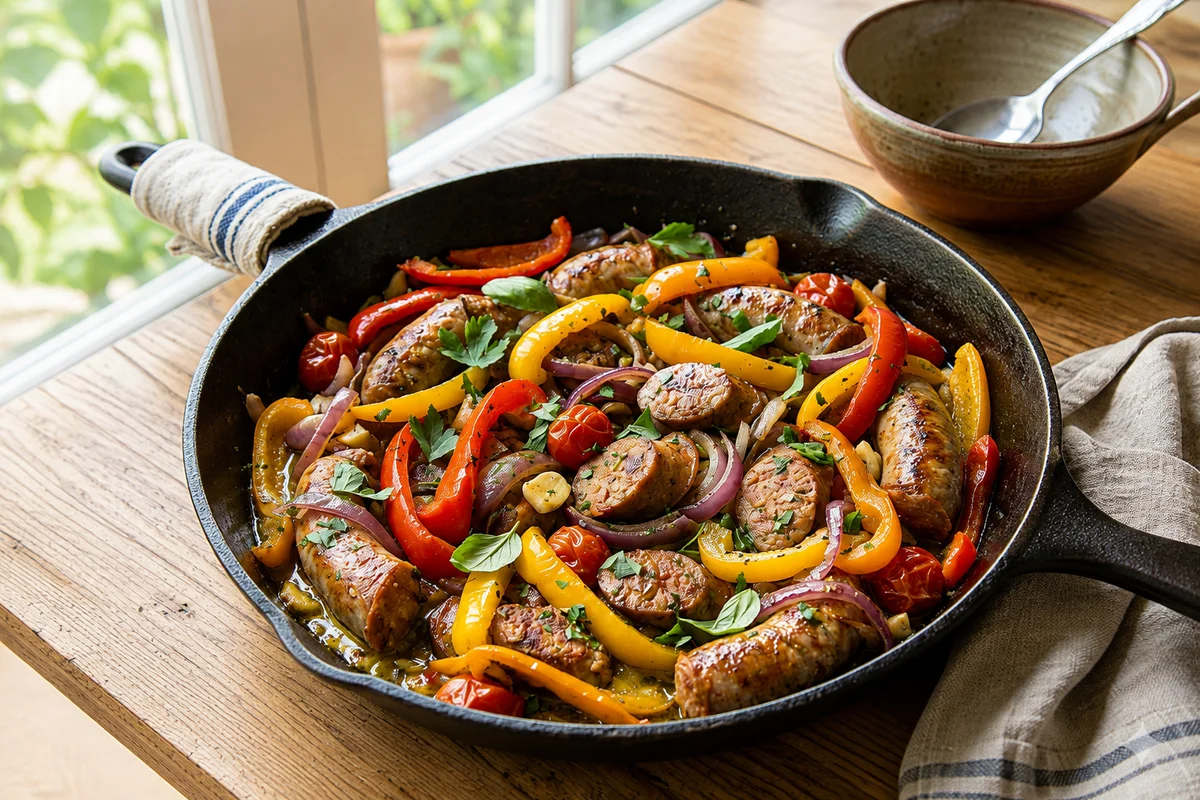
One Pan Sausage and Peppers is an easy Italian sausage skillet dinner loaded with sweet bell peppers, onion, and garlic, made completely in one pan. It takes about 35 minutes from start to finish and is ideal for busy weeknights, feeding a hungry family, or anyone who wants big flavor without a sink full of dishes.
Why This Recipe Works
Why You'll Love This One Pan Sausage and Peppers
I've made this dish more times than I can count, and the trick that changed everything was searing the sausage first, then finishing it low and slow with the lid on — it's what keeps the outside from burning before the inside is actually cooked through. Everything happens in the same skillet, so the sausage drippings become the base of flavor for the peppers and onions instead of getting wasted.
There's no red sauce here, so it comes together faster than the tomato-simmered versions, and it's genuinely a one-pan meal — no grill, no broiler, no second pan for the sausage. It's ready in about 35 minutes, which makes it realistic for a weeknight, and it's easy to customize with whatever sausage or pepper colors you have on hand.
Ingredients
- 4 Italian sausage links (sweet or hot), about 1 1/4 lbs
- 2 tbsp olive oil, divided
- 3 bell peppers (red, yellow, orange), sliced
- 1 large yellow onion, sliced
- 3 garlic cloves, minced
- 1/2 cup chicken broth or dry white wine
- 1 tsp Italian seasoning
- 1/2 tsp red pepper flakes (optional)
- Salt and pepper, to taste
- 2 tbsp chopped fresh basil or parsley, for serving
Instructions
- Heat 1 tablespoon of olive oil in a large skillet over medium heat.
- Add the sausage links and sear, turning occasionally, until browned on all sides, about 5-6 minutes. The goal here is color, not doneness — the sausage will finish cooking in step 5.
- Remove the sausage to a plate and set aside.
- Add the remaining tablespoon of olive oil to the same skillet, then add the peppers and onion. Season with salt and pepper and cook, stirring occasionally, until they begin to soften, about 5 minutes.
- Stir in the garlic, Italian seasoning, and red pepper flakes, and cook until fragrant, about 30 seconds.
- Push the vegetables to the edges of the pan and nestle the sausage back in the center. Pour in the broth or wine.
- Reduce the heat to medium-low, cover the skillet, and let everything simmer until the sausage is cooked through and the peppers are tender, about 10-12 minutes, turning the sausage once halfway through.
- Uncover and check that the sausage reaches an internal temperature of 160°F (165°F for chicken or turkey sausage). If it needs more time, cover and continue cooking in 2-minute increments.
- Slice the sausage on a diagonal, then return it to the pan and toss everything together with the pan juices.
- Sprinkle with fresh basil or parsley before serving.
Ingredient Substitutions
Sausage: Italian sausage is the star here because it's already seasoned with fennel, garlic, and herbs, so it carries most of the dish's flavor without extra work.
No pork Italian sausage? Use Italian chicken sausage instead — it's leaner and cooks a bit faster, so start checking doneness a couple of minutes early.
Want it leaner but still pork-adjacent? Use turkey Italian sausage instead — follow the same method, checking that it reaches 165°F.
Cooking for a vegan? Use a plant-based Italian-style sausage instead — since there's no raw meat safety concern, you can shorten the covered simmer and cook mainly to heat through and soften the peppers.
No dry white wine? Use chicken broth instead — it keeps the dish simple and family-friendly without losing the deglazed pan flavor.
Want more heat? Use hot Italian sausage instead of sweet, and add an extra pinch of red pepper flakes.
No red, yellow, or orange peppers? Use green peppers instead — they're more traditional but taste sharper and slightly more bitter once cooked.
Storage & Reheating
Store leftover sausage and peppers in an airtight container in the refrigerator for up to 4 days. To freeze, let it cool completely, then transfer to a freezer-safe container or bag for up to 3 months. Thaw frozen leftovers in the refrigerator overnight before reheating.
Reheat in a skillet over medium-low heat until warmed through — this is the best method for keeping the peppers from turning soft and watery. The microwave works in a pinch; cover loosely and reheat in short bursts, stirring in between. An air fryer at 350°F for a few minutes also works well and helps the sausage keep some texture.
How to Keep the Sausage From Burning
This is the most common complaint with sausage and peppers, and it comes down to heat control, not luck.
- Sear over medium heat, not high heat — a hard sear browns the casing before the inside catches up.
- Turn the sausage every couple of minutes instead of leaving one side down the whole time.
- Once it's browned, cover the pan and drop to medium-low. The lid traps steam and finishes cooking the sausage gently instead of charring the outside further.
- Judge doneness by internal temperature, not color. A dark, caramelized outside doesn't always mean it's cooked through — use a meat thermometer if you're unsure.
- If you notice scorching at any point, lower the heat immediately rather than pulling the pan off — sudden temperature swings can leave the center undercooked.
How to Keep Peppers Tender, Not Mushy
- Slice the peppers into even strips so they cook at the same rate.
- Don't overcrowd the pan — if your skillet is small, cook the peppers in two batches so they soften instead of steaming in their own liquid.
- Keep the heat at medium during the sauté step; too high and the edges burn before the inside softens.
- Once they're fork-tender, get them off direct heat — peppers left in a hot pan (even off the burner) keep cooking and can turn soft and watery.
Variations
- Chicken sausage: Swap in Italian chicken sausage for a leaner option. It cooks slightly faster, so start checking for doneness a couple of minutes early.
- Turkey sausage: A good middle ground between pork and chicken sausage — follow the same method, checking that it reaches 165°F.
- Vegan sausage: Plant-based Italian-style sausage links work well here. Since there's no raw meat safety concern, you can shorten the covered simmer and cook mainly to heat through and soften the peppers.
- Sweet vs. hot: Use sweet Italian sausage for a milder, kid-friendly version, or hot Italian sausage (and a pinch more red pepper flakes) if you want more heat.
- Pepper colors: Swap in green peppers for a sharper, more traditional flavor, or use all one color if that's what you have.
- Extra vegetables: Sliced mushrooms or zucchini can go in with the peppers and onions for a bulkier skillet.
What to Serve With Sausage and Peppers
- Crusty Italian or French bread, for soaking up the pan juices
- Steamed or garlic rice
- Pasta tossed with olive oil and parmesan
- Roasted or mashed potatoes
- Creamy polenta
- A simple green salad
Frequently Asked Questions
Can I make sausage and peppers in one pan?
Yes. Sear the sausage first, then cook the peppers and onions in the same skillet using the drippings for flavor. Nestle the sausage back in with a splash of broth, cover, and let everything finish cooking together — no grill or second pan needed.
What kind of sausage is best for sausage and peppers?
Italian sausage is the classic choice because it's already seasoned with fennel, garlic, and herbs. Sweet Italian sausage gives a milder flavor, while hot Italian sausage adds a spicy kick. Either works equally well in this one-pan method.
Can I use chicken sausage?
Yes, Italian chicken sausage is a leaner substitute that works well in this recipe. It tends to cook a bit faster than pork sausage, so start checking the internal temperature a couple of minutes early to avoid overcooking it.
Can I use sweet or hot Italian sausage?
Both work great, and it really comes down to preference. Sweet Italian sausage is mild and family-friendly, while hot Italian sausage brings more heat. You can even mix the two if you want a range of spice levels in one skillet.
Can I make sausage and peppers without tomato sauce?
Yes, this recipe skips the red sauce entirely. Instead, the flavor comes from browning the sausage, sautéing the peppers and onions in the drippings, and deglazing with a splash of broth or wine, so the vegetables stay the star of the dish.
How do I know Italian sausage is cooked through?
The most reliable way is to check with a meat thermometer — pork sausage should reach 160°F and chicken or turkey sausage 165°F. Don't rely on color alone, since a well-browned outside doesn't always mean the center is fully cooked.
How do I keep peppers from getting mushy?
Slice them evenly, avoid overcrowding the pan, and cook them over medium heat rather than high heat. Pull them off direct heat as soon as they're fork-tender, since peppers left in a hot pan will keep softening even after the burner is off.
What goes well with sausage and peppers?
Crusty bread is the classic pairing for soaking up the pan juices, but it's just as good over rice, pasta, or creamy polenta. Roasted potatoes and a simple green salad both round out the meal nicely too.